

Understanding Lump Sum Aged Care Contributions (RADs and RACs)
BY LUKE KIDD
Entering residential aged care is a major life transition, and understanding the financial framework is essential for making informed, confident decisions. One of the most significant components of aged care funding in Australia is the lump sum Refundable Accommodation Deposit (RAD). With recent reforms now in effect from 1 November 2025, it’s more important than ever to understand how accommodation payments work and how to plan for them strategically. In this article, we break down what you need to know about Refundable Accommodation Deposits.
What Is a RAD?
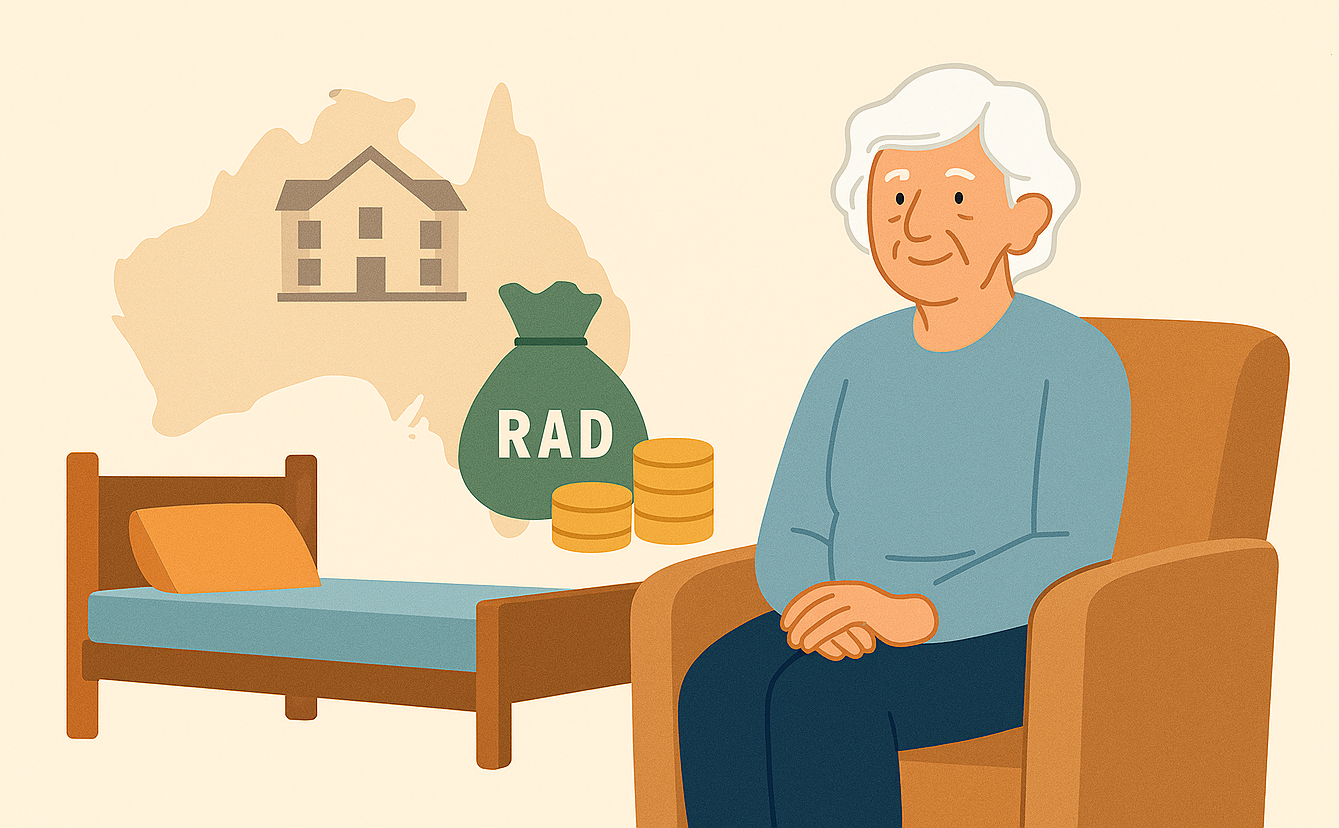
A Refundable Accommodation Deposit (RAD) is a lumpsum payment made when entering a residential aged care facility. A simple way to think of this payment is like purchasing the room itself. RADs are refunded to the resident or their estate when they leave the facility. The amount refunded will vary depending on whether the resident has used the lump sum to cover other ongoing fees as well as any RAD retention amounts (explained below). You may choose to pay the RAD in full, pay nothing upfront and instead make Daily Accommodation Payments (DAPs), or use a combination of both depending on your financial preferences. Residents have up to six months after moving into care to pay the RAD, however many aged care facilities will allow you to make additional RAD payments at any time.
How RADs Are Determined
The amount an aged care provider charges as a RAD can vary significantly between facilities. Several key factors influence the RAD amount, including:
Location: metropolitan and high-demand regions generally attract higher RADs.
Quality, size, and amenities of the facility: modernised or premium homes typically charge more.
Room type: single rooms, private ensuites, and deluxe spaces come at a higher cost than shared or standard rooms.
To protect consumers, the Australian Government places a cap on how much providers can charge without seeking special approval. Under the current rules:
From 1 July 2025, the maximum accommodation payment amount is $758,627, indexed annually.
If a provider wants to charge a RAD above this cap, they must apply for approval from the Independent Health and Aged Care Pricing Authority (IHACPA). This ensures that a higher fee is justified.
The approval system ensures transparency and accountability in accommodation pricing. All providers must publish their approved prices on My Aged Care, and they cannot charge more than the published amount (1).
Funding Options
Residents have three accommodation payment options:
A. Paying a full lumpsum RAD
This amount is held by the facility and refunded upon departure, less any drawdowns and applicable retention amounts.
B. Paying a Daily Accommodation Payment (DAP)
Instead of paying a lump sum and “buying” the room, you can elect to pay a Daily Accommodation Payment (DAP) fee as “rent”. The DAP is calculated using the Maximum Permissible Interest Rate (MPIR) (currently 7.65%) charged on the unpaid RAD. (For example: a $450,000 unpaid RAD results in a DAP of $94.32 per day at a 7.65% MPIR.)
C. Paying a Combination of RAD and DAP
This blended approach gives flexibility by allowing you to pay part of the lump sum upfront while funding the remainder through daily payments.
RAD Retention Amount
With the aim of improving the aged care system’s long term financial sustainability. The government introduced a RAD retention amount effective from 1 November 2025. Under this arrangement, aged care providers now deduct 2% of the RAD balance each year, capped at 5 years, meaning a portion of the initial RAD is no longer refunded to the resident or their estate. Retention amounts are calculated daily and deducted at least quarterly. Note that because the retention amount is based on the remaining RAD balance which reduces over time, the effective retention amount is actually a bit less than 10%. The timing of the resident’s lump sum contributions will also affect this calculation. (2)
LowMeans Residents
For individuals with lower income and assets, the aged care system provides concessional arrangements. Instead of a RAD, eligible residents may be asked to pay a Refundable Accommodation Contribution (RAC) or Daily Accommodation Contribution (DAC). These contributions are meanstested and ensure access to care regardless of financial position, with the government stepping in to subsidise all or part of the accommodation cost. So, if you qualify as a low-means resident, the RAC/DAC amount will vary depending on your financial position, not the price of the room you live in. Note that lump sum RACs are also subject to an 2% annual retention amount.
Where Does the LumpSum Money Come From?
Families often need to plan ahead to fund a RAD. Common funding sources include:
Cash or bank savings
Redeeming investment portfolios or superannuation.
Selling or downsizing the family home
Using a combination of part RAD and DAP payments to preserve liquidity
With interest rates (MPIR) affecting the cost of unpaid RAD balances, financial advice is critical to determine the most cost effective strategy and balance considerations such as tax, age pension benefits, cash flow, liquidity and estate planning.
Final Thoughts
Aged care accommodation planning is complex, and the 2025 reforms add a new layer of financial consideration for families. Understanding RADs, DAPs, new retention rules and concessional options is important to ensure you make the right decision in your aged are transition. Professional financial advice can make this challenging journey clearer and ensure your family’s finances remain secure while accessing the right level of care. If you are considering aged care options for yourself or a loved one, our team is here to help you navigate every step.
References
Australian Government Department of Health - Published prices and maximum accommodation payment amounts
https://www.health.gov.au/our-work/residential-aged-care/charging/maximum-accommodation-payment-amountsAustralian Government Department of Health – RAD and RAC Retention
https://www.health.gov.au/our-work/residential-aged-care/charging/rad-and-rac-retention
Luke Kidd AR No. 1242685